
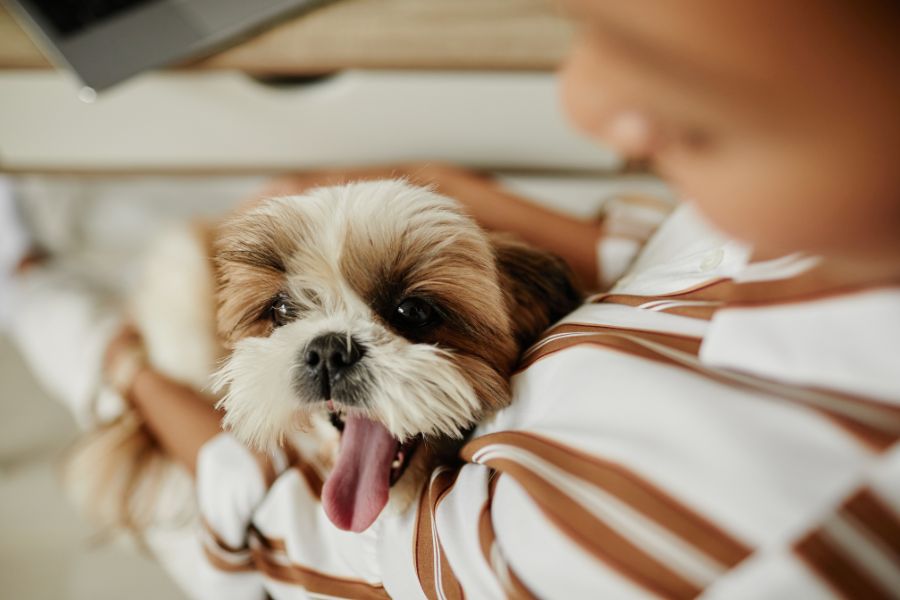
If your dog paces, whines, hides, or becomes destructive, anxiety may be the cause. Learning how to calm an anxious dog can improve your pet’s behavior, comfort, and overall health. Many dogs experience stress from loud noises, separation, travel, or unfamiliar environments.
In this guide, we’ll explain the common causes of anxiety, signs to watch for, and proven tips that actually work. These veterinarian-recommended strategies will help you reduce stress, create a calm environment, and support your dog’s emotional well-being.
What Causes Anxiety in Dogs?
Understanding the cause is the first step in learning how to calm an anxious dog. Dogs can develop anxiety for several reasons, including:
Common Triggers of Dog Anxiety
- Separation from owners
- Loud noises like thunderstorms or fireworks
- New environments or travel
- Changes in routine
- Past trauma or rescue history
- Lack of socialization
- Aging and cognitive changes
Some dogs develop Separation Anxiety in Dogs, which occurs when they become stressed when left alone. Others may struggle with noise sensitivity or fear-based anxiety.
Recognizing your dog’s triggers helps you choose the right calming method.
Signs Your Dog May Be Anxious
Dogs show anxiety in different ways. Some signs are obvious, while others are subtle.
Common Symptoms of Dog Anxiety
- Excessive barking or whining
- Pacing or restlessness
- Trembling or shaking
- Destructive chewing
- Hiding or avoiding interaction
- Panting without exercise
- Accidents inside the house
If these behaviors happen frequently, your dog may be experiencing stress. Knowing these signs helps you act early and learn how to calm an anxious dog before symptoms worsen.
Create a Calm and Safe Environment
One of the simplest ways to calm your dog is to create a relaxing space at home.
Tips for Creating a Calm Space
- Provide a quiet, comfortable bed
- Use soft lighting
- Reduce loud noises
- Keep favorite toys nearby
- Maintain a consistent routine
Dogs feel more secure when they know what to expect. A calm environment reduces anxiety and promotes relaxation.
You can also use calming music designed for dogs. Gentle sounds can help soothe pets during stressful situations such as thunderstorms or fireworks.
Exercise Helps Reduce Anxiety
Physical activity is one of the most effective ways to calm anxious dogs. Exercise releases energy and reduces stress hormones.
Best Exercises for Anxious Dogs
- Daily walks
- Playtime in the yard
- Puzzle toys
- Fetch or interactive games
- Training sessions
Regular exercise improves mental health and helps prevent destructive behavior. Even 20 to 30 minutes of activity can make a noticeable difference.
Dogs that receive enough exercise are generally calmer and more relaxed at home.
Use Positive Reinforcement Training
Training helps build confidence and reduce anxiety. Positive reinforcement encourages calm behavior.
How to Use Positive Reinforcement
- Reward calm behavior with treats
- Use a gentle voice
- Avoid punishment
- Practice basic commands
- Stay consistent
Dogs respond best to calm, supportive training. This method helps reduce fear and builds trust.
Training also helps dogs feel more secure in unfamiliar situations.
Try Calming Products for Dogs
Several products are designed to help anxious dogs relax. These tools can be especially helpful during stressful events.
Popular Calming Options
- Calming dog beds
- Anxiety wraps
- Pheromone diffusers
- Calming treats
- White noise machines
Some dogs respond well to Dog Appeasing Pheromones, which mimic natural calming signals. These products can help reduce stress in many dogs.
Always consult your veterinarian before introducing supplements or calming aids.
Establish a Consistent Routine
Dogs thrive on routine. Predictable schedules reduce anxiety and create stability.
Daily Routine Tips
- Feed at the same time each day
- Walk your dog regularly
- Maintain bedtime consistency
- Schedule playtime
Routine helps dogs feel safe and lowers stress levels. This simple step is often overlooked, but very effective when learning how to calm an anxious dog.
Use Desensitization Techniques
Desensitization gradually exposes dogs to triggers in a controlled way.
Example of Desensitization
If your dog fears thunderstorms:
- Play soft thunder sounds
- Reward calm behavior
- Slowly increase volume
- Repeat regularly
This method helps dogs become less reactive over time. Patience is important when using this approach.
Desensitization works best when combined with positive reinforcement.
Provide Mental Stimulation
Mental enrichment helps reduce boredom and anxiety.
Ways to Stimulate Your Dog Mentally
- Puzzle feeders
- Training exercises
- Scent games
- Interactive toys
- Hide and seek
Mental stimulation keeps dogs engaged and prevents stress. Mentally active dogs tend to be calmer and happier.
Consider Professional Help
If your dog’s anxiety is severe, professional guidance may be necessary.
When to Seek Veterinary Advice
- Aggressive behavior
- Severe separation anxiety
- Constant trembling
- Loss of appetite
- Destructive behavior
A veterinarian may recommend behavior training, environmental changes, or medications if needed.
In some cases, anxiety may be linked to Cognitive Dysfunction Syndrome in Dogs, especially in senior pets. Professional evaluation ensures proper treatment.
Natural Ways to Calm an Anxious Dog
Many pet owners prefer natural approaches. These methods can help reduce anxiety safely.
Natural Calming Techniques
- Gentle massage
- Aromatherapy safe for pets
- Calming music
- Increased companionship
- Comfortable blankets
These simple strategies can make a big difference. Always introduce new methods gradually.
Mistakes to Avoid When Calming an Anxious Dog
Some actions may unintentionally increase anxiety.
Avoid These Common Mistakes
- Punishing fearful behavior
- Ignoring early signs of anxiety
- Inconsistent routines
- Forcing dogs into stressful situations
- Skipping exercise
Avoiding these mistakes helps you effectively learn how to calm an anxious dog and support emotional health.
When Dog Anxiety Becomes an Emergency
In rare cases, anxiety may become severe.
Seek Immediate Help If Your Dog
- Tries to escape frequently
- Self-injures
- Stops eating
- Shows sudden personality changes
Prompt veterinary care ensures your dog receives the right treatment.
Learning how to calm an anxious dog takes patience, consistency, and understanding. Creating a calm environment, maintaining a routine, providing exercise, and using positive training techniques can significantly reduce anxiety. Every dog is different, so finding the right combination of strategies is key to long-term success.
If your dog continues to struggle with anxiety, professional guidance can help identify the best solution. A trusted animal hospital is needed for personalized care and expert support. You can contact Superior Animal Hospital and Boarding Suites in Superior, WI, to schedule an appointment and help your dog feel calm and comfortable.
FAQs
1. What is the fastest way to calm an anxious dog?
Ans: The fastest way to calm an anxious dog is to move them to a quiet space, use a calm voice, and provide a comforting object like a favorite toy or blanket.
2. Can exercise help reduce dog anxiety?
Ans: Yes, regular exercise reduces stress hormones and helps burn excess energy, making dogs calmer and less anxious.
3. Are calming treats safe for anxious dogs?
Ans: Most calming treats are safe, but it is best to consult your veterinarian before giving supplements to ensure they are appropriate for your dog.
4. How do I calm my dog during thunderstorms?
Ans: Create a safe space, close windows, use calming music, and stay calm to help reduce your dog’s stress during storms.
5. When should I take my dog to the vet for anxiety?
Ans: You should consult a veterinarian if anxiety causes destructive behavior, aggression, appetite loss, or frequent distress.
Superior